
Governments, business must execute now on efforts to overcome economic crisis: Coalition for a Better Future’s Scorecard report
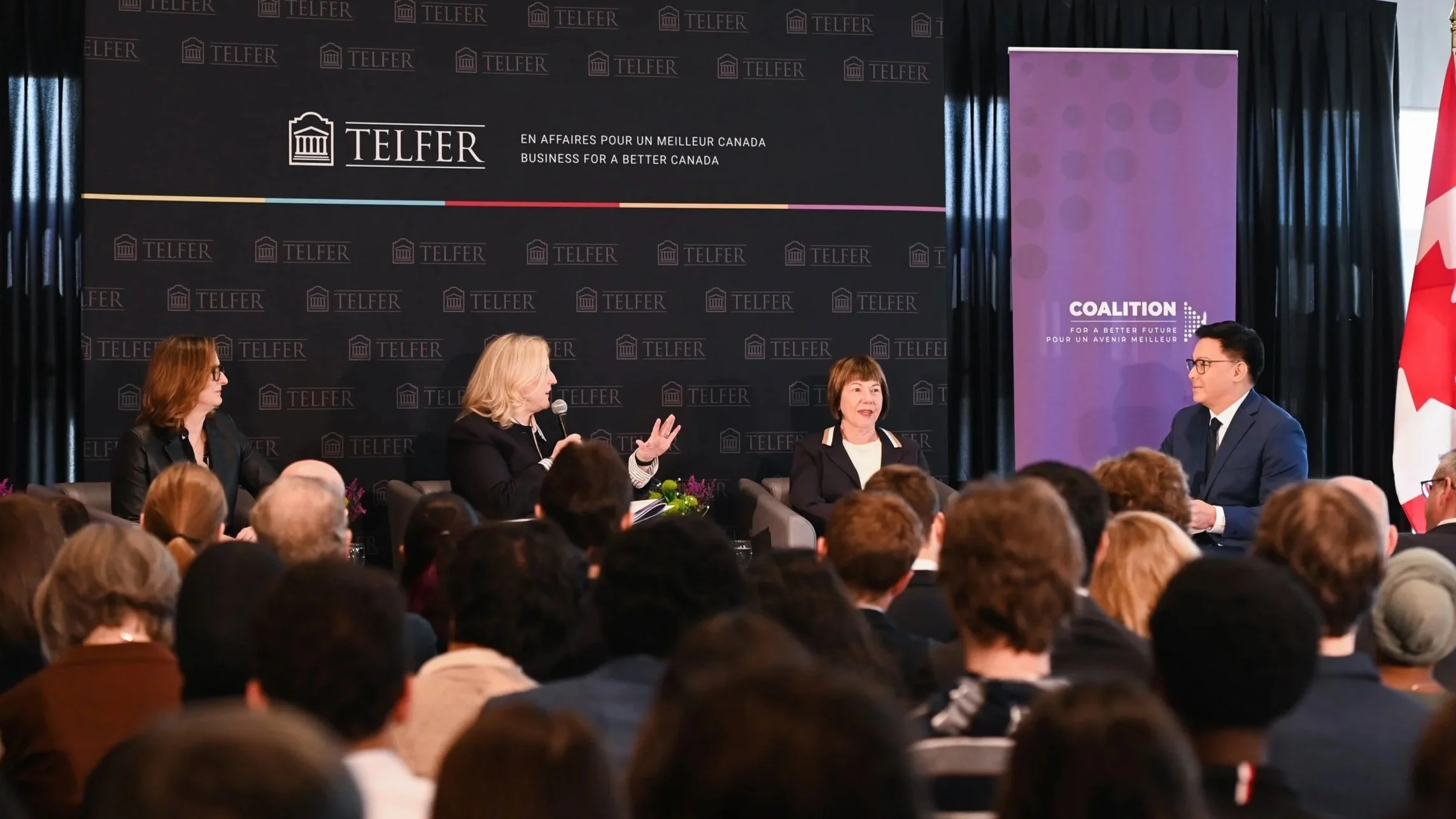
Carolyn Wilkins, External Member of Bank of England’s Financial Policy Committee; Lisa Raitt, co-chair, Coalition for a Better Future; Anne McLellan, co-chair, Coalition for a Better Future; and Michael Serapio, CPAC PrimeTime Politics host, pictured at the Coalition For a Better Future’s Scorecard Reporting Event March 26. | PHOTO: Melanie Shields
Canada’s government and business leaders must act decisively now to address the worsening crisis with the country’s economy, the Coalition for a Better Future declared as it released its latest economic Scorecard Report.
“It is time to execute. It’s go time,” Coalition co-chair Lisa Raitt said as she and co-chair Anne McLellan kicked off a panel discussion on the Coalition’s Scorecard Reporting Event.
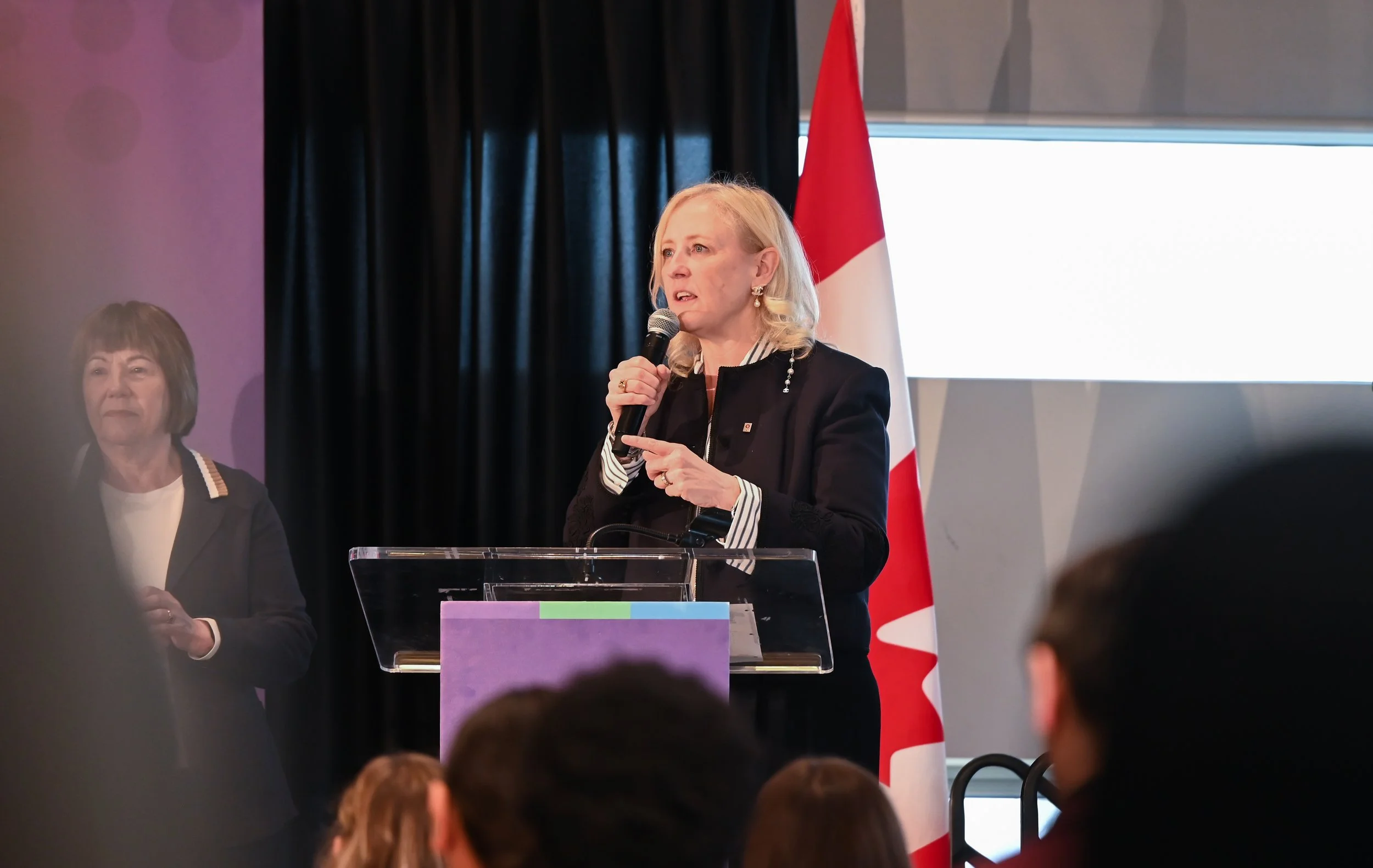
“It is time to execute. It’s go time,” said Hon. Lisa Raitt, co-chair, Coalition for a Better Future | PHOTO: Melanie Shields
The Coalition’s fourth annual report shows persistent economic problems that they have captured in earlier reports, “and the numbers we see here are really beginning to crystallize how deep the trough” is that Canada has to dig out of, Raitt told moderator Michael Serapio of CPAC.
Canada’s economic foundation is eroding, and we are not facing a gradual change, but a crisis, according to this year’s Scorecard entitled “Time to Execute: Canada’s Crucible Moment.”
The report, which examines 21 economic measures in relation to specific 2030 targets, highlighted a central vulnerability in Canada’s economy: an enduring lack of business investment that is driving weak productivity, stagnant wages, and declining per capita incomes compared to Canada’s G7 peers.
Among the causes, the panelists cited unwieldy and time-consuming regulations, internal trade barriers, failure to keep successful start-ups from relocating abroad, the lack of a government-business environment that favours entrepreneurs and the longstanding tendency to rely too heavily on the U.S. market for exports.
“It’s been too easy to ship things south to the U.S., and it made sense,” McLellan commented during the discussion held at the University of Ottawa’s Telfer School of Management. “But now I think we’ve been shaken to our core in terms of that basic working assumption.”
Time to respond to new challenges
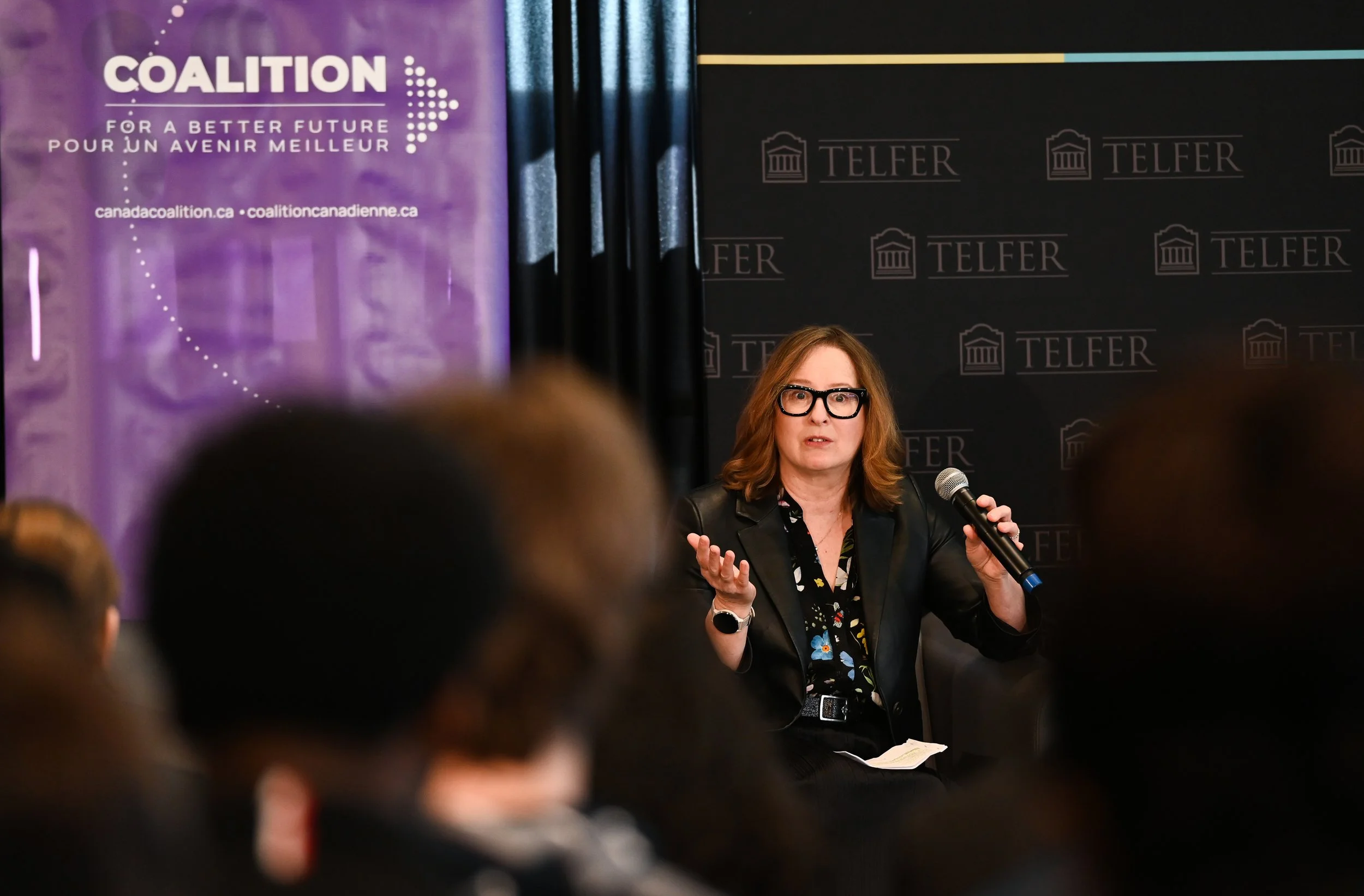
Carolyn Wilkins, External Member of Bank of England’s Financial Policy Committee. | PHOTO: Melanie Shields
McLellan added that businesses need to step up. “They’re going to have to take the risk of diversifying, as our prime minister has been saying,” McLellan said. “Where are the new markets? It’s Asia, it’s India. It’s time for us to start building” to shore up Canada’s future, she said.
Carolyn Wilkins, an External Member of the Bank of England’s Financial Policy Committee, noted that federal leaders, including former prime minister Stephen Harper, have negotiated many free-trade deals with countries around the world, but “we haven’t been taking advantage” of these expanded trade opportunities.
Key findings in this year’s Scorecard included:
Non-residential private-sector investment as a share of nominal GDP dropped to its lowest level since the 1950s.
12 per cent of youth are not in employment, education or training.
The poverty rate has rebounded to 10.9 per cent after a pandemic-era low of 6.8 per cent.
Food prices are 27 per cent higher than five years ago.
Canada saw a 0.2 per cent population decline in late 2025, the largest decline outside of the COVID years since the 1940s.
Yet panelists agreed that Canada has the strengths–in terms of resources, a well-educated workforce and the motivation from external events–to do better.
For instance, this country now has 28 Narwhal companies (start-ups worth U.S. $1 billion), surpassing the Coalition’s 2030 goal of 17.
But this country doesn’t have as many large Canadian champions leading its business line-up as other countries, McLellan noted. Canada has 20; the Coalition’s goal is 40.
Canada has to establish the conditions to create more of these large firms because “they carry the country’s brand around the world,” McLellan told the panel. “They create the buzz in relation to innovation and risk-taking, and a place where you want to come and think about investing and working and living.”
“The top line isn’t very good,” Wilkins observed, referring to the lack of business investment that is contributing to low GDP growth per capita at the same time that inflation is rising.
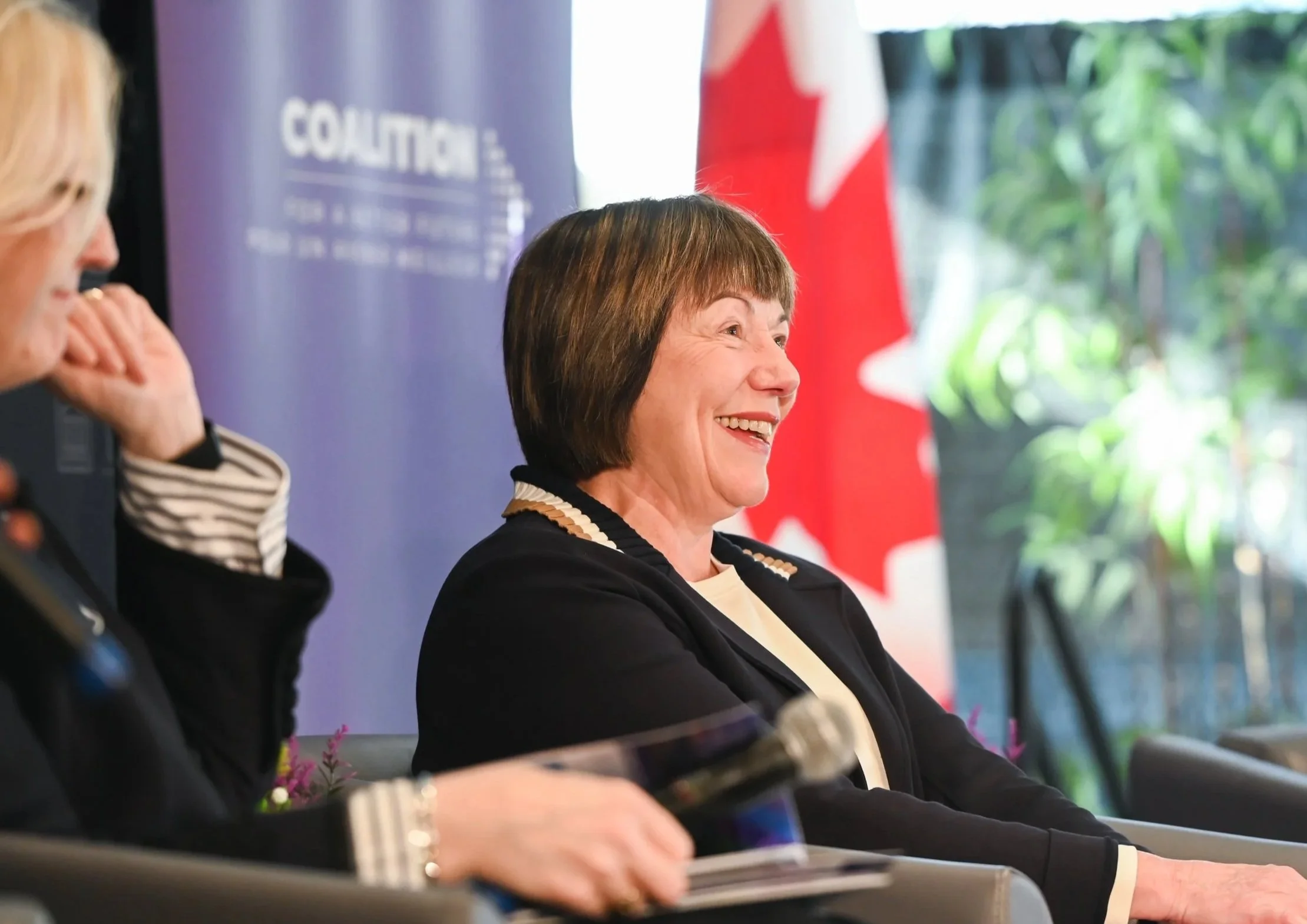
“Business and government will have to do a better job cooperating to deal with the upheaval in Canada caused by the end of dependable U.S.-Canada trade, that changed everything,” said Hon. Anne McLellan, co-chair, Coalition for a Better Future. | PHOTO: Melanie Shields
Government needs to focus on reversing this trend, she said. Canadians must “build the capacity for our economy to create the companies and jobs that go with it in communities across the country–not just in big cities but in rural areas–that play to our strengths so you can build strong communities,” Wilkins stated. “That’s the only way out of this.”
But panelists said they were a bit encouraged by the current efforts of the federal government to work more closely with the provinces and other levels of government and with the business community to try to get the economy back on track.
Raitt said she has to be optimistic. “I hear a lot of planning, and I hear a lot of changes,” she said, some of which are exciting as Canadians respond to “external changes.” But, “even though we’re all looking forward to what could be really great,” she said, the economic “trough we’ve got to come out of” is very deep.
McLellan said: “Business and government will have to do a better job cooperating to deal with the upheaval in Canada caused by the end of dependable U.S.-Canada trade, that changed everything.”
Rural Canada, “an industrial powerhouse,” says report

"Rural Canada is ready to prove to the rest of Canada that we're punching far above our weight," said Secretary of State for Rural Development Buckley Belanger during a fireside chat with Serapio. | PHOTO: Melanie Shields
Continuing with the theme of making a difference for Canadians, Secretary of State for Rural Development Buckley Belanger said the federal government knows it must reset its goals with Canada’s rural communities and small towns.
"Rural Canada is ready to prove to the rest of Canada that we're punching far above our weight," Belanger said during a fireside chat with Serapio. "We want absolutely every aspect of our economy pumping on all cylinders."
He noted that 13 per cent of Canadians live in rural Canada, but they contribute to 27 per cent of the country’s GDP. He said this reality is often overlooked by policymakers.
As part of its Scorecard Report, the Coalition assesses the condition of Canada’s rural regions, highlighting their significance as “an industrial powerhouse,” the report says. “Our collective prosperity depends heavily on exports from these regions to fuel growth."
Belanger said he and other government officials have been “criss-crossing” the country as part of an extensive effort to respond to rural Canada’s needs.
He told the audience that rural Canadians are glad Ottawa is doing more to engage with them on a range of issues, but while small-town and rural residents are seeking government help, they want to craft their own solutions.
They say, Belanger recounted: “If you help us address these issues and navigate through the complexities of applying for support and programs and investments that the federal government does,” it will be appreciated. And “after you’ve done that, then get out of our space–we’ll take it from here.” There’s no doubt they’re willing to do their part, he stressed.
Asked by Serapio whether the government is working on applying a cross-government rural lens on all public policy, Belanger said, “Absolutely. There are different folks that have different perspectives on how we apply the rural lens, and we can bring various scenarios, various matrices on how to build that rural lens.”
The priority now is to hold talks with rural Canadians in every part of the country to develop ways to meet their needs in “a very methodical way.”
For example, he said, the federal government is working with satellite and telecommunications companies to achieve universal high-speed internet coverage by 2030. And he noted that the government sees this not just as spending, but as an investment. Noting the advantages of bringing services like telehealth to all areas of the country, Belanger said, "One of the things that I would say is an investment piece around connectivity will pay off for many, many years.”
Housing, training and rural transportation needs are also being looked at by the government for rural advances, he told Serapio.
Understanding of rural Canadians’ often-ignored contribution to Canada’s economy appears to be growing, Belanger suggested, pointing out that Innovation, Science and Economic Development Canada received more than 3,000 submissions for its consultations in advance of Ottawa’s planned Rural Development Action Plan. The next step is a federal-provincial-territorial conference to discuss the way forward, he said.

Hon. Karina Gould, Liberal MP and Chair of the House of Commons Finance Committee. | PHOTO: Melanie Shields
During the event, Liberal MP and Chair of the House of Commons Finance Committee, Karina Gould, and Conservative MP Greg McLean, the Chair of the Conservative Economic Growth Council, also delivered remarks.
Nik Nanos, Chief Data Scientist at Nanos Research, presented new data on Canadians' perspectives on the direction of the economy. This presentation contributed to a panel focused on the future workforce, which included Claudio Rojas, CEO of the National Angel Capital Organization; Stephen Lucas, CEO of Mitacs and former Deputy Minister of Health Canada; and Victoria Mancinelli, who serves as the Director of Public Relations, Communications, Marketing, and Strategic Partnerships at LiUNA!
The closing panel discussion at the event addressed how to unlock Canada's potential with participants including Justine Hendricks, President and CEO of Farm Credit Canada; Jeff Nankivell, President and CEO of the Asia Pacific Foundation of Canada; Kristan Straub, President and CEO of the Canada Indigenous Loan Guarantee Corporation; and Marie-Eve Sylvestre, President and Vice-Chancellor of the University of Ottawa.