
Gould and McLean urge confidence, investment, and long-term thinking as Canada navigates unprecedented uncertainty
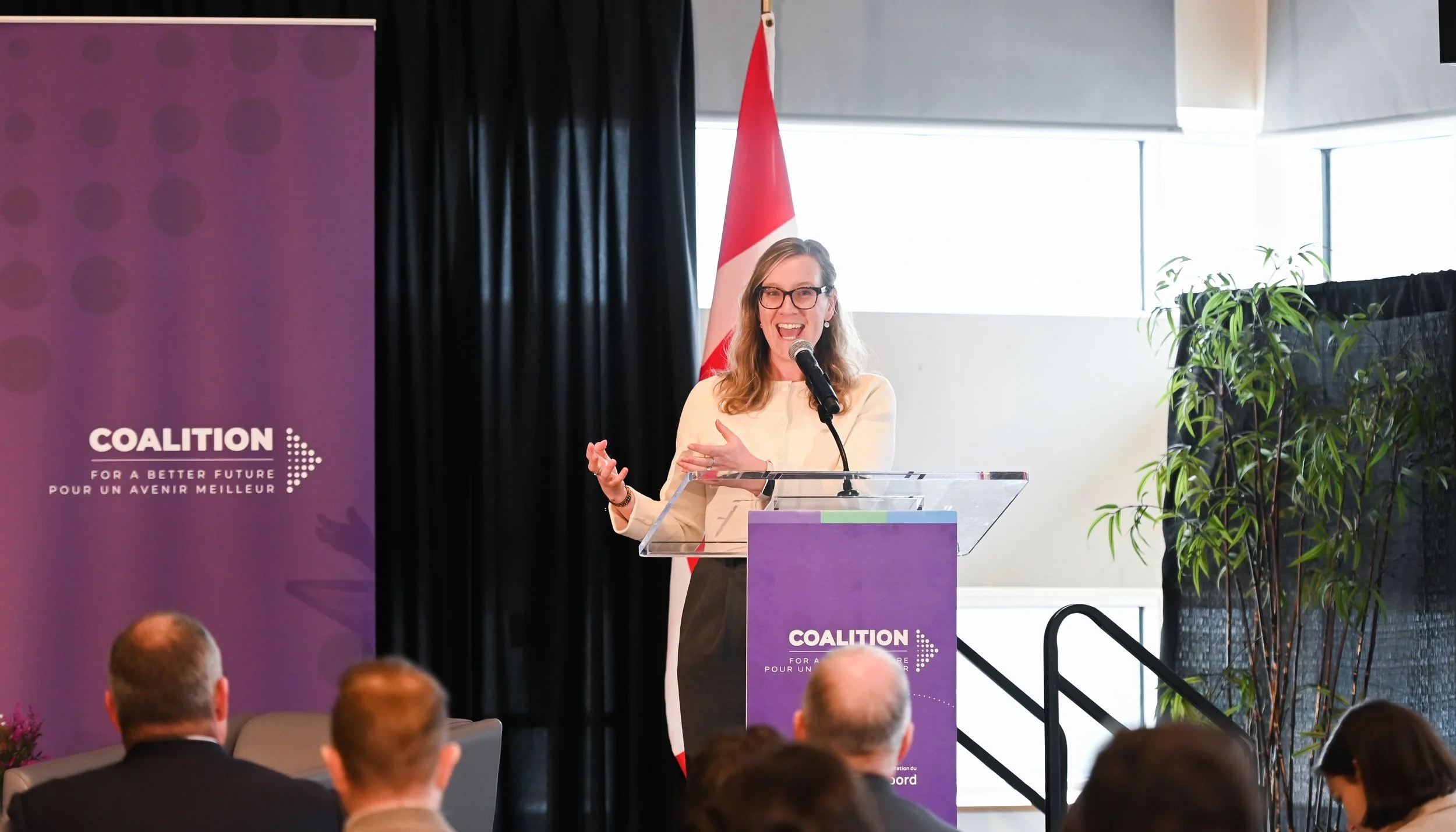
Hon. Karina Gould, Liberal MP and chair of the House of Commons Finance Committee, speaks to attendees at the Coalition for a Better Scorecard Reporting Event, March 26. | PHOTO: Melanie Shields
Political leaders from across the aisle delivered candid assessments of Canada’s economic moment at the Coalition for a Better Future's Scorecard Reporting event, where Liberal MP and former Cabinet Minister Karina Gould and Conservative MP Greg McLean shared a call to action for business leaders, students, and policymakers alike.
The event, held at the Telfer School of Management at the University of Ottawa, brought together stakeholders to discuss Canada's progress against 21 key economic benchmarks, with the Coalition's latest scorecard serving as the backdrop for a discussion of the country's economic standing.
Canada has what it takes — but must act
Gould opened with a message of cautious optimism, acknowledging that it’s hard not to feel things are out of control, given the wars and disruptions facing Canadian businesses and communities.
Speaking as the chair of the House of Commons Finance Committee, she said, “The main thing that we continue to hear from experts, witnesses, from businesses is just the state of uncertainty,” pointing to ongoing trade tensions with the United States as a source of anxiety that can feel beyond anyone's control.
But she pointed out that there are things “we can control and there are decisions that we make that will determine our own future.”
For instance, it was previously thought that it would take five years for Canada to reach the NATO target of spending two per cent of GDP on defence. But the federal government has done so in one year.
“When we are determined, and we make intentional decisions, we can get things done, and we can get big things done," she said.
Gould also highlighted what she called a remarkable dual advantage for Canada: an abundance of natural resources alongside a world-class capacity to drive innovation.
“We are so rich in resources, natural physical products. But yet we also have this other incredible capacity. We are the creators of artificial intelligence,” said Gould.
She argued that Canadians have the imagination and agency to shape how transformative technologies like AI develop, and to ensure new tools drive productivity rather than harm.
“My message today…is when it comes to things like AI, we actually have an opportunity right now to set the guardrails to determine whether this is something that is in fact going to help us take off when it comes to productivity or whether it’s going to have negative consequences.”
Sharing solutions for long-term growth
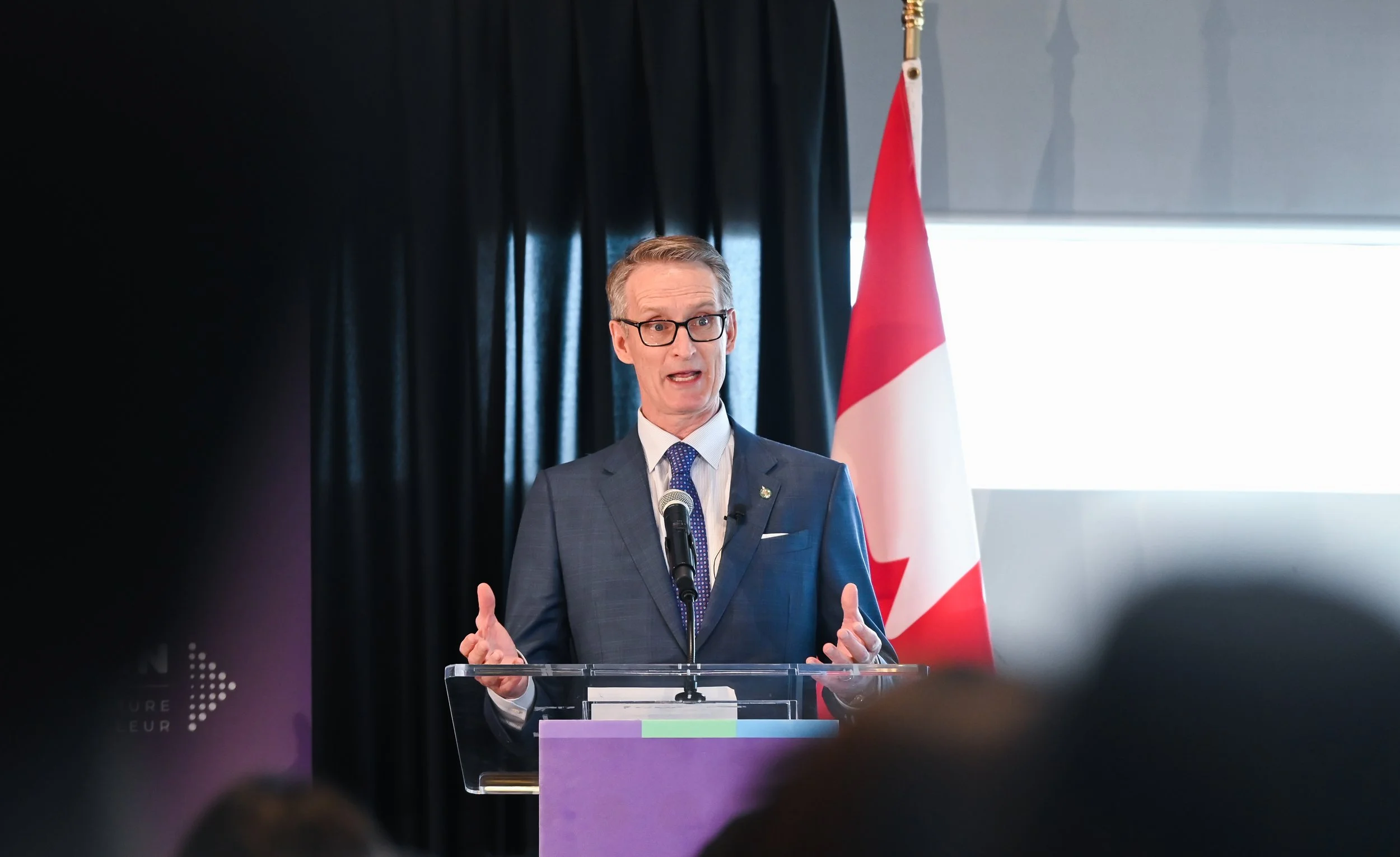
Greg McLean, Chair, Conservative Party Economic Growth Council and Member of Parliament for Calgary-Centre, delivers remarks at the University of Ottawa. | PHOTO: Melanie Shields
Greg McLean, who chairs the Conservative Party’s Economic Growth Council, followed with a perspective shaped by a cross-Canada listening tour, holding consultations with 200 organizations.
"You don't manage what you don't measure," McLean said, praising the Coalition's Scorecard model as the kind of accountability framework the federal government itself should embrace. “Set your goals on what you want to accomplish and make sure you're measuring your outcomes along the way.”
The tour informed the development of pro-growth policies that the Conservative Party plans to bring forward over the next year. A top priority, McLean said, is to reduce regulatory overlap between levels of government. McLean noted that regulations governing business have grown to 300,000 from 200,00 in the past decade. In this context, he said he was pleased to see Ottawa and Alberta have reached an agreement on methane emissions regulation.
Other areas of priority for the council include: rethinking taxation; building national sovereignty in defence and data; expanding trade infrastructure to meet Asia's surging demand; protecting Canadian intellectual property rather than allowing startups to be acquired by foreign firms; and improving access to capital for growing Canadian companies.
On natural resources development, the goal should be to bring Canada back to a state in which it is exploiting its resources at a reasonable level, McLean said. But he praised the federal Liberals for trying to move in this direction.
A cross-partisan unifying message
Despite their different political homes, both speakers converged on a central theme that echoes the Coalition for a Better Future's own mandate: Canada is not a country lacking in assets or talent. What it needs now are the decisions, the accountability structures, and the long-term vision to turn potential into prosperity.
It is a period of shocks and uncertainty, Gould noted. But “when you look at the Scorecard, it is so clear–we have everything we need here,” she added. “We have the talent, we have the resources. Now we just have to make the decisions to really ensure that our economic future takes off.”
“Long-term growth is what we need,” said McLean. Echoing the cross-partisan message of the Coalition for a Better Future, he said that when it comes to policy solutions, “it doesn't matter what party brings them forward; it matters what happens to the country. And that's our responsibility as parliamentarians.”