
Forestry can be the driver for innovation and growth Canada’s economy needs, says COFI president

Canada can grow its economy when all natural resources are considered nation-building projects, says Kim Haakstad, President and Chief Executive Officer of the BC Council of Forest Industries (COFI).
Haakstad argues that forestry is uniquely positioned to deliver immediate, sustainable and inclusive growth while other major projects work their way through approvals.
“Natural resources are a competitive strength — these industries fuel research, skilled jobs, and clean-tech deployment,” she said. “We need oil and gas, mining, clean energy, and forestry to drive innovation and prosperity.”
The comments come as British Columbia’s forest sector faces significant pressures, including combined duties and tariffs of about 45 per cent in ongoing Canada-U.S. trade disputes, recent mill closures and rising operating costs. At the same time, Haakstad says forestry is one of the few major projects already capable of generating growth now.
“In B.C., forestry has been designated a major project,” she said. “Unlike many large-scale projects that require years of permitting, forestry already has the people, infrastructure, and supply chain in place. We can unlock growth now while new mines, LNG facilities, and clean-energy projects progress through approval processes.”
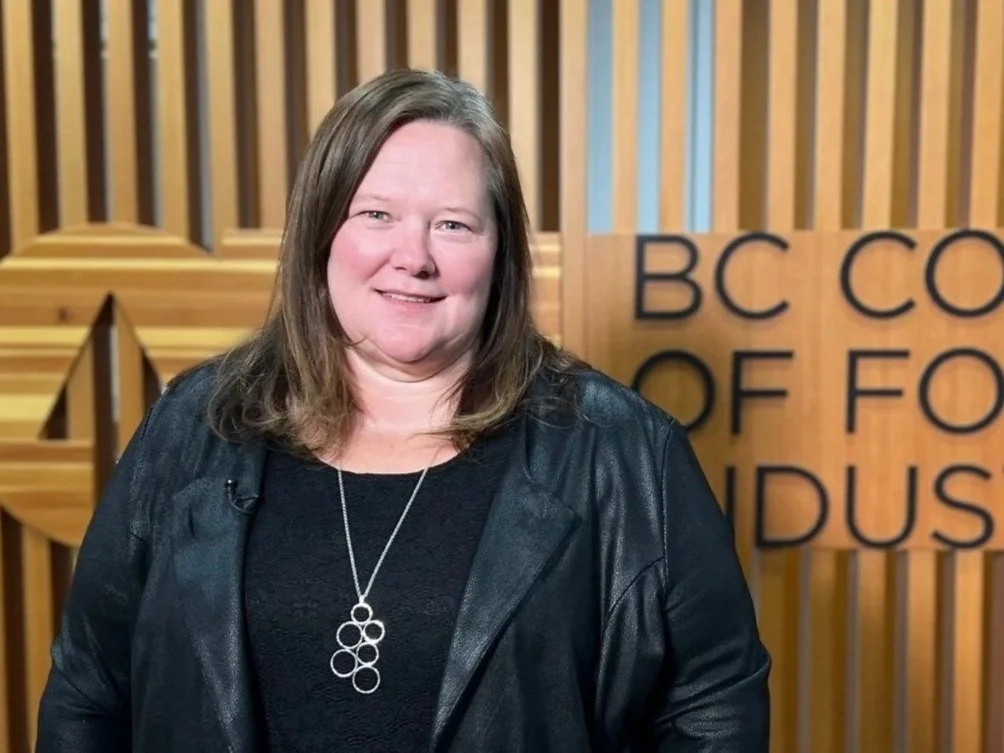
“Unlike many large-scale projects that require years of permitting, forestry already has the people, infrastructure, and supply chain in place.”
Kim Haakstad, President & CEO, BC Council of Forest Industries
COFI represents the interests of British Columbia’s forest industry, a sector that supports nearly 50,000 direct jobs in the province and contributes $17.4 billion to the province's GDP. Nationally, the forest industry employs nearly 200,000 people and generates $87 billion in economic activity, spanning everything from logging and manufacturing to bioenergy, engineered wood and mass timber.
The “and” rather than “or” sentiment is one reason why COFI is a Coalition for a Better Future member. “With other members of the Coalition, we have a shared belief that a strong economy is essential to fund the public services Canadians rely on, and forestry is one of the industries that builds that strength,” she said. “The Coalition … aligns with our ‘and, not or’ perspective: that Canada needs all resource sectors — including a competitive forestry sector — to build a better future.”
Haakstad said recent trade challenges have compounded existing challenges. “A complex set of headwinds is already straining the sector, and ongoing trade disputes amplify those pressures,” she said.
In response to mill curtailments and closures, COFI is calling for urgent action from both provincial and federal governments. While welcoming recent federal steps such as enhanced liquidity supports and expanded employment relief programs, Haakstad emphasized that “their effectiveness will depend on how quickly these supports reach operators on the ground.”
She noted the long-term solution remains a negotiated softwood lumber agreement with the United States, alongside changes in B.C. to improve competitiveness, including more predictable and economic access to logs, reduced regulatory burden, and faster permitting.
The sector also sees opportunity to grow domestic demand for Canadian wood, particularly as governments push housing and infrastructure development. “Any efforts to increase domestic use of wood are helpful — forest sector produces affordable, low-carbon building materials we need for housing and infrastructure,” she said, pointing to modern methods of construction such as mass timber and modular building systems.
Globally, COFI says demand for Canadian wood remains strong, particularly in Asia. On recent trade missions to Japan and Korea, Haakstad said they “heard clearly that these markets want Canadian wood to help them meet climate targets in the building sector,” though she warned that Canadian products are becoming less cost-competitive relative to European, Russian and local suppliers.
“We need to improve cost competitiveness while maintaining strong environmental standards and reducing unnecessary regulatory burden,” she said.
Beyond economics, Haakstad framed forestry as a solution to broader societal challenges. “Forestry can and is part of the solution to a number of challenges facing Canadian society,” she said, citing housing affordability, wildfire mitigation, economic development and reconciliation with Indigenous communities.
“Across B.C. and Canada, forestry supports contractors, transport companies, equipment suppliers, and service providers in communities of all sizes—not just mills,” she said. “We need to create the enabling conditions for prosperity through regulatory modernization and growth incentives.”
“Forestry can and is part of the solution to a number of challenges
facing Canadian society.”
Kim Haakstad, President & CEO, BC Council of Forest Industries
Looking ahead to its annual convention in April, Haakstad said COFI’s core message will be that “Forestry is a solution.” Unlocking that potential will require governments, industry and communities to work together to improve competitiveness and create what it calls “the enabling conditions for prosperity.”
“Forestry is already a leading renewable resource industry,” Haakstad said, “but it needs a competitive environment to continue delivering.”
Additionally, she said, innovation is reshaping the sector and Canada has a competitive advantage because of its globally recognized stewardship standards, strong research institutions, and deep expertise across the value chain as markets move toward low-carbon materials.
Haakstad said she sees three key transformations: advanced wood products and modern construction methods that speed up low-carbon housing delivery; digital and climate-smart forestry tools that improve planning, wildfire resilience, and forest health; and a growing bioeconomy that turns residual wood into renewable energy and new bioproducts, strengthening rural economies while reducing emissions.
“Our challenge—and opportunity—is to maintain that leadership by ensuring the policy environment encourages investment, innovation, and scale,” she said. “Forest resilience requires a shift toward more active management and faster, more coordinated decision-making.”
When it comes to sustainable economic growth, communities that depend on forestry are often on the front lines of climate change, facing both the physical impacts on forests and the economic fallout when wood supply becomes unpredictable and mills are forced to curtail or shut down.
“Protecting these communities means ensuring both healthy forests and a stable operating environment for the sector,” Haakstad said, emphasizing that its priority is keeping mills operating.
Mills, she noted, play a central role in rural economies that extends far beyond direct employment. “A mill is far more than a workplace,” she said. “It supports a broad ecosystem of indirect jobs—contractors, trucking companies, equipment suppliers, maintenance crews, and service providers. In many communities, mills also supply critical local services such as clean electricity and heat, and wastewater treatment. When mills close, the economic and social impacts ripple quickly across the region. Ensuring predictable access to wood and a competitive operating environment is essential to sustaining these community-serving facilities.”
Haakstad said healthy forests and strong communities are inseparable. Through more active forest management, investment in the infrastructure that keeps people working, and decisions made in partnership, Haakstad said it is possible to build both ecological resilience and long-term economic stability not only across rural British Columbia but all of Canada.
“Forestry has always been part of that story in Canada, and with the right policy environment, it can continue to be a key driver of inclusive and sustainable prosperity,” she said.